



In this article, we'll cover:
- What is Extended Producer Responsibilty (EPR)?
- How Do EPR Laws Work?
- What are the current EPR Laws in the U.S.?
- Who Pays Under Extended Producer Responsibilty?
- How does EPR impact Sustainable Packaging?
- What Should You Look for in a Packaging Partner Under EPR Laws?
- Conclusion
Extended Producer Responsibility (EPR) is reshaping packaging regulations across the United States. As packaging waste increases and municipal recycling systems face funding gaps, states are adopting packaging EPR laws that shift financial responsibility from taxpayers to producers.
For brands, manufacturers, importers, distributors, and food-service businesses, understanding these laws in the U.S. is critical. This is important for compliance, cost planning, and long-term packaging strategy.
What is Extended Producer Responsibilty (EPR)?
Extended Producer Responsibility (EPR) is a rule that makes producers pay for recycling or disposing of packaging.
It covers the packaging and products they put on the market.
Under traditional waste systems, municipalities pay for recycling programs through taxes and local fees. Under EPR laws, producers, typically brand owners or importers, are financially responsible for:
- Recycling program funding
- Reporting packaging data
- Paying EPR fees
- Supporting infrastructure improvements
Packaging EPR laws are designed to:
- Reduce packaging waste
- Improve recycling and composting systems
- Encourage better packaging design
- Shift waste management costs upstream
Unlike voluntary sustainability initiatives, EPR compliance is mandatory under state law.
How Do EPR Laws Work?
While Extended Producer Responsibility laws vary by state, most follow a similar structure.
Who Qualifies as a “Producer” Under EPR?
In packaging EPR legislation, the “producer” is usually:
- The brand owner listed on the product
- The importer bringing goods into the U.S.
- The manufacturer (if no brand owner is identified)
- In some cases, distributors
The definition of producer is central to EPR compliance and varies by state.
Which packaging materials does this cover?
Most U.S. packaging EPR laws apply broadly to:
- Plastic packaging
- Paper and fiber packaging
- Multi-material packaging
- Single-use food-service packaging
- Certain compostable materials
Durable goods and specialized materials may be excluded, but coverage is generally comprehensive for consumer packaging.
How are EPR Fees Calculated?
Producers must report the amount and type of packaging placed into a state’s market. EPR fees are typically based on:
- Weight of packaging
- Material type
- Recyclability or compostability
- Ease of processing within existing infrastructure
Many programs use modulated fees, meaning harder-to-recycle packaging carries higher costs. This structure incentivizes sustainable packaging design and material simplification.

What are the current EPR Laws in the U.S.?
Packaging Extended Producer Responsibility laws are expanding across the United States. Several states have enacted legislation, with phased implementation timelines that typically include:
- Producer registration
- Data reporting requirements
- Fee collection
- Infrastructure investment
Additional states are actively considering packaging EPR legislation, and momentum continues to build.
For businesses operating in multiple states, EPR compliance planning is becoming more complex. Even companies in states without active producer responsibility laws may see indirect impacts through:
- Supplier cost adjustments
- Packaging redesign efforts
- National brand policy changes
Monitoring state-level packaging regulations is now a key risk management practice.
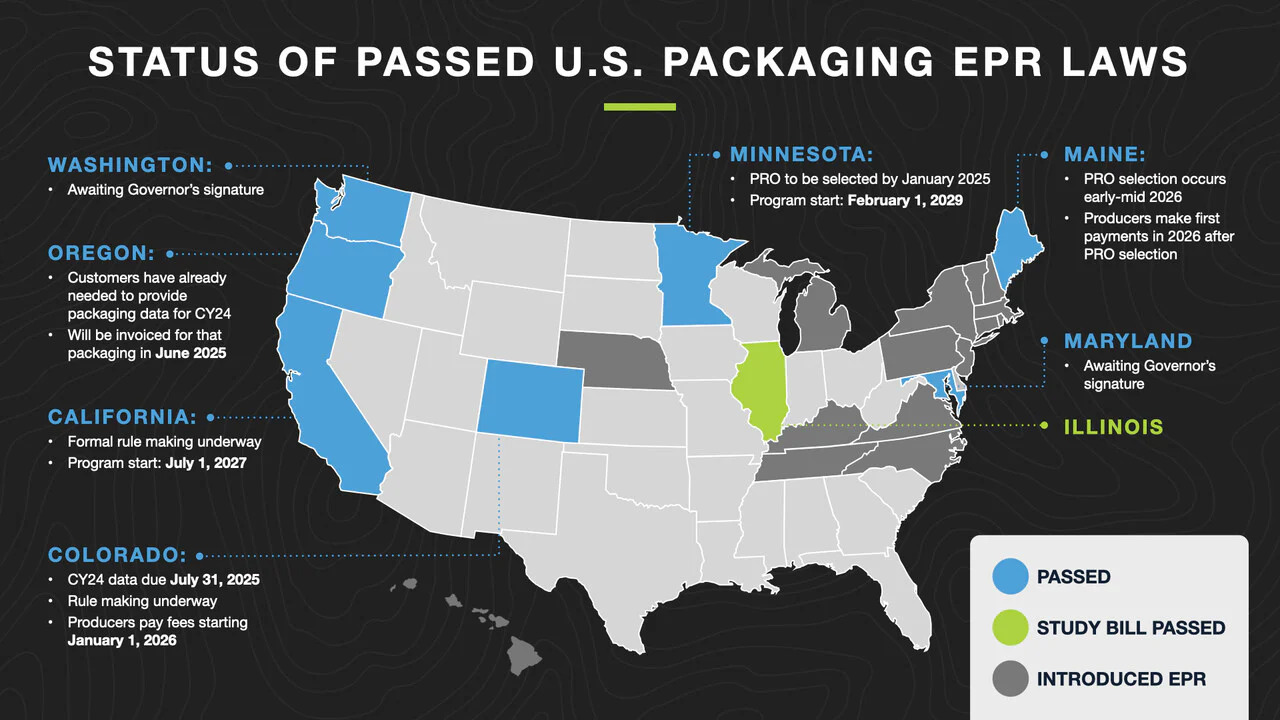
Map from A New Earth Project
Who Pays Under Extended Producer Responsibilty?
Under most packaging EPR laws, the legal responsibility for payment falls on the producer. However, the economic impact often extends throughout the supply chain.
Direct Responsibility Producers must:
- Register with the state or Producer Responsibility Organization (PRO)
- Report packaging data
- Pay EPR fees
Indirect Impacts EPR costs may be reflected in:
- Increased packaging prices
- Material shifts
- Administrative compliance costs
- Gradual price adjustments across product lines
How EPR Affects Food-Service Businesses
Restaurants, cafés, caterers, and institutions are usually not considered producers unless they sell branded packaged goods at scale. However, food-service businesses may experience:
- Changes in packaging availability
- Price fluctuations tied to EPR fees
- Greater emphasis on packaging transparency
- Increased scrutiny of single-use materials
Choosing knowledgeable packaging suppliers becomes increasingly important under EPR systems.
How does EPR impact Sustainable Packaging?
Sustainable packaging design plays a significant role in Extended Producer Responsibility outcomes.
Does Compostable Packaging Reduce EPR Fees?
Compostable packaging is not automatically exempt from EPR fees. How it is treated under Extended Producer Responsibility programs depends on several factors, including state-specific legislation, access to composting infrastructure, certification standards, and the strength of local collection systems.
Sydney Harris, Policy Director at Upstream Solutions, states, "In every packaging EPR program, returnable reusable packaging reduces producers' fees and reporting burdens. To minimize EPR compliance demands, work with your PRO (Producer Responsibility Organization) to transition to reuse systems."
In many cases, recognized third-party certifications and verified composting infrastructure can influence how materials are categorized, which may affect fee structures, reporting requirements, and overall compliance obligations under packaging EPR laws.
Designing Packaging for EPR Readiness
Businesses preparing for packaging EPR compliance should consider:
- Reducing multi-material combinations
- Selecting materials aligned with established recycling streams
- Ensuring accurate labeling
- Tracking packaging weights and composition
- Evaluating end-of-life pathways
Thoughtful packaging design can reduce regulatory risk and long-term EPR costs.

What Should You Look for in a Packaging Partner Under EPR Laws?
As Extended Producer Responsibility laws expand across the United States, working with a knowledgeable packaging supplier becomes increasingly important.
Good Start Packaging focuses on material transparency, certified compostable options, and clear documentation, all of which support businesses navigating evolving EPR compliance requirements. Because EPR fees often depend on the material type, weight, and end-of-life pathway. Keep these factors in mind when you choose boxes, cups, and other packaging. This can reduce long-term risk.
By prioritizing sustainable materials, verified certifications, and supply chain clarity, we help food-service operators make choices that align with emerging producer responsibility regulations.

Conclusion
Extended Producer Responsibility (EPR) is transforming packaging regulations in the United States. As more states adopt packaging EPR laws, producers will face required reporting, fees, and compliance duties. The design and material choices will tie these together.
For manufacturers, distributors, and food-service businesses, understanding producer responsibility laws is essential for managing risk, controlling costs, and making informed packaging decisions. EPR is not simply an environmental initiative. It changes how organizations finance and manage material waste.
Businesses that review their packaging now can build stronger supplier partnerships. They can also match materials to changing recycling systems. This will help them as Extended Producer Responsibility programs expand across the U.S.